Tahiti: Injecting Tropical Joy into Your Design Projects
If you have spent any time scrolling through design feeds lately, you know that flat, one-dimensional text is often no longer enough to stop the scroll. In a marketplace saturated with minimalism, there is a growing appetite for color, personality, and texture. Enter Tahiti, a typeface that does not just sit on the canvas but practically dances off it. This is a premium font that captures the essence of tropical vibrancy and modern flair, offering a solution for anyone looking to break away from the mundane.
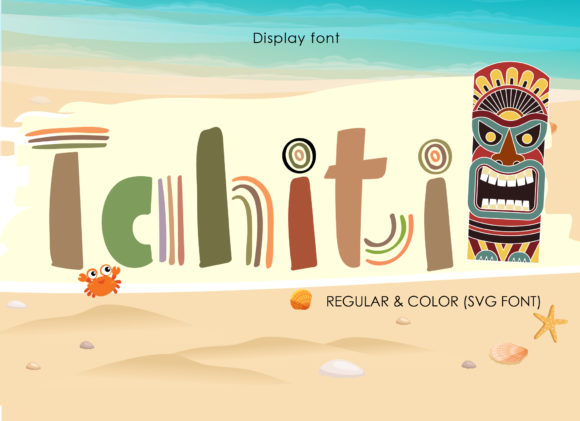
At its core, Tahiti is a color font, specifically utilizing OpenType-SVG technology. For the uninitiated, this means the font file contains vector data that includes color and texture, allowing you to type in full gradients and hues directly from your keyboard. It is not just a letter shape waiting to be filled; it arrives ready to party. The visual style is bold, spirited, and unapologetically fun. It embodies a sense of uniqueness that standard black-and-white typefaces simply cannot replicate. Whether you are working on a summer campaign or a personal project that needs a splash of joy, Tahiti delivers a visual punch that turns creative ideas into standouts.
Why Color Fonts Are Changing the Game
For decades, typography was strictly about the silhouette of the letter. If you wanted color, you had to manually add it in post-production. Color fonts like Tahiti streamline this workflow. When you use this typeface, you are working with a creative font asset that is essentially pre-designed. This is particularly valuable for social media graphics and web design, where speed and visual impact are paramount. Instead of spending time layering effects, you can simply type your message and let the inherent style of the font do the heavy lifting.
However, it is crucial to understand the technical landscape to get the most out of this tool. Tahiti is available in OTF and/or TTF formats that support color. It works seamlessly in professional software like Adobe Photoshop, Adobe Illustrator, Silhouette Studio, and Inkscape. This compatibility makes it a favorite among designers who need reliable design assets.
A Note on Compatibility: Because Tahiti relies on advanced color data, it is not compatible with standard Cricut machines. If you are a crafter using Cricut, you may encounter limitations, as the machine's software often struggles to interpret the complex SVG data embedded in color fonts. If you are unsure how to implement this in your workflow, checking a comprehensive font guide is always a wise move to ensure your hardware and software align.
Visual Character and Personality
Tahiti is best described as a display font. This means it is designed to be used at larger sizes where its details can be appreciated. Think headlines, logos, and posters rather than the body text of a novel. Its personality is loud, energetic, and confident. It lacks the stiff formality of a traditional serif font and the neutrality of a standard sans serif font. Instead, it occupies a space of expressive typography.
The appeal of Tahiti lies in its ability to instantly set a mood. A standard black script font might evoke elegance, but Tahiti evokes a party. It is perfect for projects that require an immediate emotional connection with the audience. The visual hierarchy it creates is undeniable; when Tahiti is on the page, it is the star of the show. This makes it an excellent choice for logo design where you want the brand name to be memorable and distinct.
Strategic Applications: Where Tahiti Belongs
Knowing what a font looks like is one thing; knowing where to use it is where strategy comes in. As a designer or business owner, you need to evaluate if the playful nature of Tahiti fits your brand identity.
Branding and Packaging
For businesses targeting a younger demographic or those in the lifestyle, beauty, food, or entertainment sectors, Tahiti can be a game-changer. Imagine a juice brand using this font for their logo, or a summer festival using it for their wristbands. In packaging design, shelf appeal is everything. A colorful, bold typeface can differentiate a product from competitors using standard black text. It communicates that the brand is modern, approachable, and fun.
Digital and Editorial Design
In editorial design, such as magazine covers or blog headers, Tahiti works beautifully for drop caps or pull quotes. It breaks the monotony of text-heavy layouts. For digital creators, particularly on platforms like Instagram or TikTok, using Tahiti in video thumbnails or story highlights can significantly increase engagement. It mimics the aesthetic of modern motion graphics but in a static format.
Event and Personal Use
Beyond commercial use, this font shines in personal projects. Think birthday invitations, bachelorette party merchandise, or scrapbooking. If you are a crafter using compatible software (not Cricut, remember!), you can create vibrant decals and heat transfers that look professional without needing advanced design skills.
Practical Guidance for Designers
Integrating a specialized font like Tahiti into your toolkit requires a bit of finesse. Here is how to handle it like a pro:
- Evaluating Project Fit: Before dropping Tahiti into a corporate banking report, pause. This typeface has a distinct voice. It fits "fun," "creative," and "energetic" briefs. It fits less well with "conservative," "strict," or "academic" contexts. Always match the font's voice to the client's message.
- Font Pairing Strategies: Because Tahiti is so loud, it needs a quiet partner. Do not pair it with another display font or a busy handwritten font. Instead, pair it with a clean, geometric sans serif font. A font like Montserrat, Roboto, or Helvetica works well for body text, allowing the headlines in Tahiti to pop without overwhelming the reader.
- Readability Considerations: While Tahiti is legible at display sizes, avoid using it for long paragraphs or small text sizes. The complexity of the color fills can become muddy if scaled down too much. Use it for impact, not for information density.
- Commercial Licensing: If you are using Tahiti for a client project or selling merchandise, ensure you have the correct commercial license. The license typically covers the creation of physical end products (like t-shirts or mugs) or digital static images, but always read the specific EULA (End User License Agreement) to be safe.
The Verdict on Tahiti
In a world of modern typography, Tahiti stands out not because it tries to be the most complex, but because it is unafraid to be joyful. It is a tool for creatives who want to inject personality into their work immediately. Whether you are a small business owner looking to revamp your social media presence or a designer seeking a unique asset for a packaging mockup, this color font offers a practical, high-impact solution.
It bridges the gap between professional design and accessible fun. By understanding its strengths—its color capabilities, its display nature, and its specific software compatibility—you can turn a simple text layer into a vibrant piece of art. Tahiti is more than just a typeface; it is a mood, a statement, and a celebration of color in design.